

How Tanzanian Smallholder Farmers Can Influence Agricultural Policy Through Collective Advocacy
Introduction
A farmer working a small plot has little influence over the rules that shape prices, land access, public spending and extension services. But those rules are not made in isolation. They take shape through negotiations among government institutions, elected representatives, businesses and organized citizens. Farmers can influence them by acting collectively, staying engaged and clearly explaining what needs to change.
That is the case for smallholder farmer advocacy in Tanzania. The goal is not simply to secure a meeting or submit a petition. It is to turn farmers’ experiences into a credible political voice: one that identifies a shared problem, proposes a workable response and follows the issue through consultation, budgeting and implementation. Effective smallholder farmer advocacy connects local evidence to decisions that affect communities.
This is no small task. Smallholders grow different crops, operate in different markets and face different local conditions. Collective advocacy must respect those differences while building a shared platform—without assuming that every farmer wants the same thing. Smallholder farmer advocacy works best when that platform reflects farmers’ varied priorities.
Who has influence, and who needs to organize?
Farmers—including crop producers, pastoralists and rural households—depend on decisions made far beyond their fields. Their strength lies in knowing how policies work in practice. But that knowledge can influence decisions only when it is organized, documented and represented by people who report back to their members. This is one reason smallholder farmer advocacy depends on trusted local leadership.
Farmer organizations are the link between local concerns and national debates. Cooperatives, associations and other member-based groups can bring priorities together, train representatives and maintain relationships with decision-makers. To remain credible, they need to be accountable to their members. Farmers should know who represents them, how positions are agreed and what happened after a meeting with officials. Strong farmer organizations give smallholder farmer advocacy a reliable structure.
Decision-makers are not a single opposing force; they have different responsibilities. Local authorities may shape services and development priorities. Ministries and agencies set sector rules and programs, while legislators influence laws and scrutinize public spending. Traders, processors and other businesses also bring their interests to the table. Farmers need to know which institution has the authority to act on each demand.
Rural representation often falters when a valid concern is directed to the wrong office or raised without a specific solution. The result may be sympathy, but no decision. Effective advocacy connects each issue to the institution and process that can address it. Smallholder farmer advocacy can help close this gap by preparing representatives to make clear, targeted requests.
Key factors
A shared agenda backed by evidence. Strong campaigns start with questions farmers can answer: Which costs have risen? Where are services unreliable? What happens to produce between harvest and sale? Personal accounts show how problems affect people, while records, surveys and local comparisons help establish how widespread they are and what might improve the situation. The evidence need not be complex, but it must be credible and easy to explain. This groundwork helps smallholder farmer advocacy turn experience into persuasive proposals.
Inclusive organizing. Farmer organizations need to include women, young people, remote communities and producers who are not already well connected. Inaccessible meeting times or unfamiliar formats can limit participation from the start. Transparent selection of representatives and regular updates help ensure advocacy does not become the work of a small, self-appointed group.
Understanding how policy decisions are made. Consultation matters when farmers arrive prepared and can trace their input to a decision. Organizations should find out how proposals are drafted, when public input is invited, which offices or committees handle an issue and how responses are recorded. They can submit concise recommendations, ask for explanations and follow up at later stages rather than treating one consultation as the end of the process. Understanding agricultural policy Tanzania also means knowing when and how farmers can contribute to decisions.
Budgets, not just promises. A policy announcement means little without funding, staff and a plan for delivery. Farmer representatives can ask which budget lines support a stated priority, how resources are allocated and how the government will show whether services reached rural communities. Agricultural budgeting gives smallholder farmer advocacy a practical way to assess whether commitments are backed by resources. Specific questions make follow-up possible.
Rights and market conditions. Advocacy also concerns land and farming rights, access to productive resources and the terms on which farmers enter markets. These issues can involve complex laws and competing interests. Campaigns should distinguish between problems that can be addressed locally and those that require wider legal or administrative change. Clear demands make it harder to answer a specific question with a general expression of support. Smallholder farmer advocacy can keep these rights concerns visible as policies are developed.
Coalitions that preserve farmers’ independence. Researchers, civil society groups, legal experts and responsible businesses can contribute knowledge and access. But farmers must remain in control of the agenda and message. A coalition that speaks over its members may attract attention at the cost of trust—a poor trade for a campaign that depends on sustained pressure.
How the contest could unfold
Imagine a campaign to improve unreliable agricultural services in several rural districts. Farmers compare their experiences, identify the specific service failures and agree on a practical remedy. Their organizations gather examples, check how widely the problem occurs and choose representatives who can explain both the evidence and the proposed change.
Next comes targeted engagement. Local representatives raise issues within the authority of local government, while national organizations take broader regulatory or funding questions to the relevant institutions. During consultation, the coalition asks that its recommendations be recorded and seeks clarity on what can change, who is responsible and when. It also reviews agricultural budgets to see whether the proposal can realistically be delivered. This coordinated smallholder farmer advocacy links consultation to funding decisions.
There may be resistance. Officials might cite limited resources, businesses may favor different rules, and farmers themselves may disagree on priorities. The campaign need not treat every objection as bad faith. It can test the reasoning, refine proposals when the evidence supports doing so and keep attention on commitments that can be measured.
The work continues after the meeting. Organizations report back to members, track decisions and check whether promised action reaches communities. If the response falls short, they can return with stronger evidence, bring in allies or ask elected representatives to scrutinize the issue. Smallholder farmer advocacy is rarely a single dramatic confrontation; it depends on organization, timing and follow-through.
Conclusion
Tanzanian smallholders cannot influence agricultural policy through numbers alone or by simply describing hardship. They gain leverage by organizing across communities, setting clear priorities and holding decision-makers accountable for policy choices and the resources needed to carry them out.
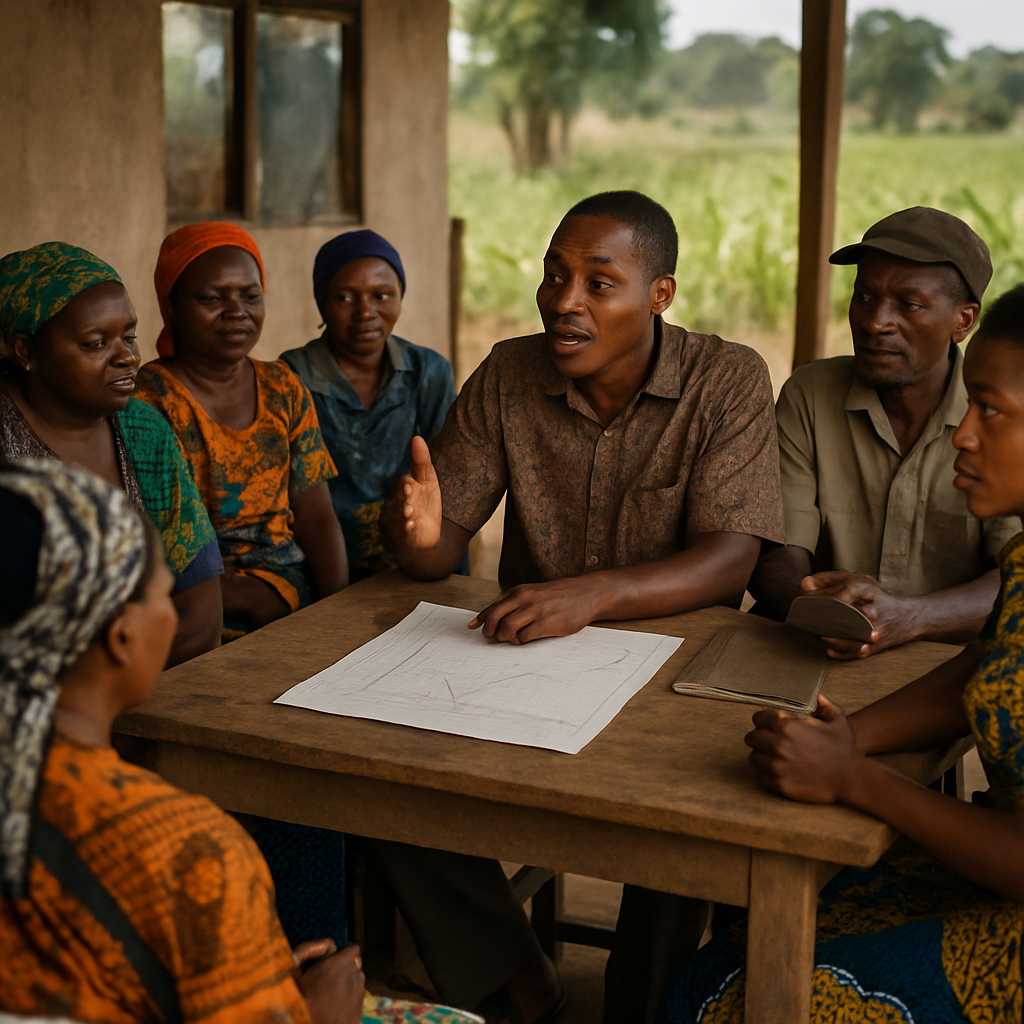
Strong farmer organizations combine local knowledge with careful preparation, inclusive leadership and persistent monitoring. This can make rural representation more than a seat at a consultation: it can help determine which problems reach the agenda, which solutions receive funding and whether commitments improve conditions in the field.