

How Smallholder Farmers Can Influence Agricultural Policy at the Local Level
Introduction
Local agricultural policy is often decided far from the fields it affects. A district budget, water allocation or extension service can shape a farm’s prospects as much as the weather or market prices. But smallholders need not wait for officials to notice them. They can organize, negotiate and influence the rules that affect their livelihoods. Understanding how local agricultural policy is made is a practical first step toward changing it.
The key is not finding a single powerful voice, but building one that decision-makers cannot ignore. This means knowing who has authority, speaking up before decisions are final and making practical requests that can be tracked after a meeting. Effective farmer advocacy connects community priorities to the local agricultural policy process.
The teams and players
Local decisions involve more than farmers and government. Village councils, municipal and district offices, agricultural departments, traditional leaders, traders and civil-society groups can all play a part. Their formal powers differ, but each can influence which issues reach the agenda and whose evidence is heard. These relationships often determine how local agricultural policy takes shape.
Smallholders often have less time, money and access to information than larger producers or well-connected businesses. Attending policy consultations may mean losing a day’s income, travelling a long distance or speaking in an unfamiliar language. Meaningful smallholder representation requires more than a seat in the room; people need a fair chance to take part.
Farmer organizations can help by bringing members’ priorities together and negotiating collectively. Cooperatives, producer associations and informal groups can gather information across communities, choose representatives and make sure officials hear from more than the most confident or well-connected participants. But organization alone does not guarantee inclusion. Leaders need a clear mandate and a way to report back to members. Strong farmer organizations can also help communities follow local agricultural policy decisions over time.
Key factors
The first factor is timing. Local plans and budgets usually move through stages: identifying problems, drafting proposals, approving them and putting them into practice. Farmers are more likely to influence local agricultural policy priorities if they get involved early, rather than waiting until funding has been allocated.
That starts with understanding how decisions are made. Farmers need to know which office is responsible for feeder roads, irrigation maintenance, extension visits, market facilities or land-use planning—and when it accepts public input. Village councils can be an accessible first forum, but they may not control the budget. A council resolution can open the door to the next level, but it may not be the final decision. Knowing this helps farmers identify where local agricultural policy can be influenced.
The second factor is evidence. Personal stories can show the impact of a policy failure, but a case is stronger when supported by specific, consistent information. Farmers might record which fields lack water, how long produce takes to reach market, when extension staff visit or which households are left out of a scheme. Simple records collected over time can reveal patterns that individual complaints miss.
Evidence should help answer practical questions: What change are farmers asking for? Who would benefit? What would it cost? How would progress be measured? A request for more reliable extension visits, for example, is more persuasive when farmers identify underserved areas and suggest a clear schedule. The goal is not to turn every farmer into an economist, but to present lived experience in a way that can stand up to scrutiny and inform local agricultural policy.
Third is coalition-building. Smallholders may share concerns with women’s groups, pastoralists, traders, local researchers or consumer organizations, even if their interests differ in other ways. Working together can broaden support, but a coalition needs a short list of priorities and an honest discussion of trade-offs. A focused alliance with a specific, feasible request is harder to dismiss than a large group without a clear position.
Policy consultations matter only if participants can influence the outcome. Farmers should ask for early notice, accessible venues and meeting times, interpretation where needed, and clear records of proposals and decisions. If a consultation takes place after key choices have been made, representatives can document the gap between public input and official action. That record can support accountability and inform the next budget cycle, including future local agricultural policy discussions.
Representation also needs careful attention. Women, young farmers, tenant cultivators and remote communities may face barriers in both public institutions and farmer organizations. Rotating spokespeople, gathering members’ views before meetings and reporting back afterward can prevent a small group of familiar representatives from becoming the only voices officials hear. Better smallholder representation makes local agricultural policy more responsive to the people it affects.
Match scenario
Consider a district preparing its annual agricultural plan while farmers report that unreliable water access is limiting production. An individual complaint may be forgotten. An organized group can document affected locations, compare accounts from different villages and submit a concise proposal through village councils and the relevant district office before the local agricultural policy plan is finalized.
Officials may ask for more evidence, refer the issue to another department or make a promise the budget cannot support. Representatives should clarify who is responsible, ask what can be funded now and get the next steps in writing. If the full request is unaffordable, a phased proposal—such as starting with the worst-served sites and publishing a maintenance schedule—can keep the issue moving without ignoring budget constraints.
Once the plan is approved, the group’s focus shifts from persuasion to monitoring. Farmers can compare the published plan with actual spending and delivery, raise missed commitments through formal channels and share the results with members. A partial win is not the end: follow-up shows whether a decision has improved conditions on the ground and whether local agricultural policy has delivered on its promises.
Conclusion
Smallholders can influence local agricultural policy through organization, evidence and persistence. They need to know who has authority, make requests before decisions are final and ensure that representation extends beyond a few established leaders. Effective advocacy links an everyday problem to a practical proposal and a way to measure results.
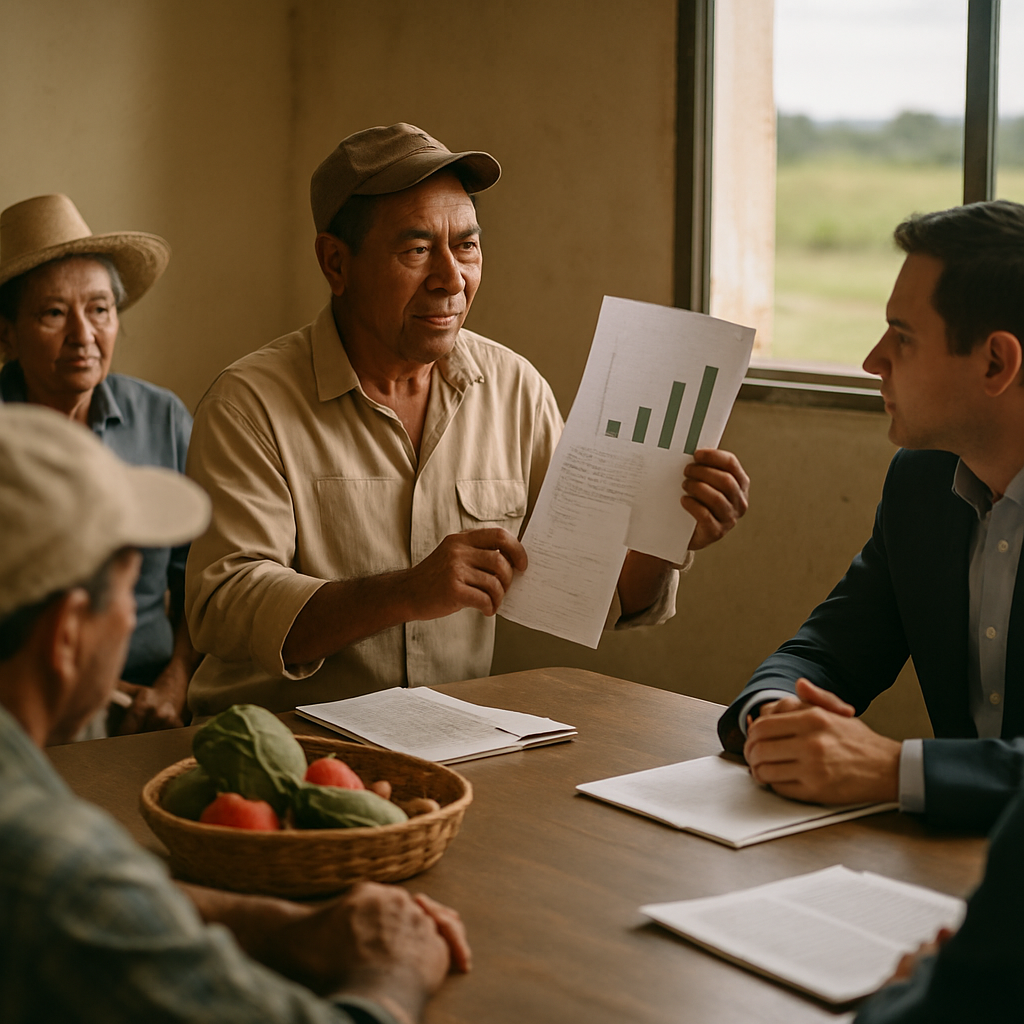
Officials may not adopt every request, and local resources may be limited. But when farmer organizations enter consultations with a clear mandate, reliable information and a follow-up plan, they help shape the debate. They become participants in setting priorities, rather than simply living with decisions made by others.