

Introduction
A strong harvest does not always mean a strong return for smallholder farmers. Much depends on what happens next: whether farmers can reach buyers, meet their requirements and retain value between the farm gate and the final market. Strong smallholder market access can help turn a good harvest into reliable income.
Improving smallholder market access takes more than finding a new customer. Farmers need a reliable offer, useful information and practical arrangements for grading, storage, transport and payment. Each can strengthen their position, while a weakness in any one can undermine the rest.
Reaching a distant premium market is rarely a single leap. More often, it takes a series of manageable steps to reduce risk and build credibility. For smallholder market access, farmers need to understand their target market, coordinate supply when necessary and negotiate terms that reflect the work involved.
Farmers, intermediaries and buyers
Farmers bring their crops and knowledge of local growing conditions. But individual producers may have limited volumes, little bargaining power and few options if a buyer rejects a delivery. These constraints do not rule out higher-value markets; they make preparation and coordination more important for smallholder market access.
Buyers do not pay for quality in the abstract. They need produce delivered on time, in the expected quantity and with consistent characteristics. Some also require traceable handling. Farmers who can meet these expectations offer buyers greater certainty, not just a crop.
Intermediaries can help connect farmers and buyers. Traders, farmer groups, cooperatives, processors and aggregators may combine volumes, arrange collection or find buyers. These market linkages can support smallholder market access. Their value depends on the services they provide and the costs they charge. Removing every intermediary does not automatically improve farmers’ returns.
Collective selling can strengthen farmers’ bargaining position, but only if the group manages the basics: transparent weighing, clear grading, reliable records and agreed payment rules. Inconsistent produce or disagreements over revenue sharing can create new risks. Strong market links depend on trust in day-to-day operations as much as on access to contacts, both of which matter for smallholder market access.
Buyer relationships grow through reliable performance. A first sale may open the door, but consistent quality, honest updates about supply and prompt problem-solving help keep it open. Where possible, farmers should also avoid relying on a single buyer. Alternative outlets provide a fallback and make it easier to compare offers, strengthening smallholder market access over time.
Key factors
Start with market information. Farmers need to know what buyers want, when demand is strongest, which grades they accept and how they set prices. Useful information can come from local traders, producer organisations, extension services, processors and direct conversations with buyers. The aim is to understand what affects the price and what it costs to meet a buyer’s requirements. This market information is essential to informed smallholder market access.
Price alone is not enough for comparison. A higher offer may involve stricter sorting, delayed payment or extra costs for packaging and transport. The better measure is net return after costs and the risk of rejection. Basic records of volumes, expenses, losses and payment dates help farmers make sound comparisons.
Match production to a real requirement. Before changing varieties or investing in inputs, farmers should confirm that a buyer’s demand is regular and find out what standards apply. These may cover size, ripeness, moisture, cleanliness, packaging or delivery time. Written or clearly recorded specifications help prevent misunderstandings.
Quality control starts before harvest. Timely harvesting, careful handling, sorting and clean storage can protect value without expensive technology. For perishable crops, timing is especially important: harvesting too early or delivering too late can wipe out the benefit of a higher price.
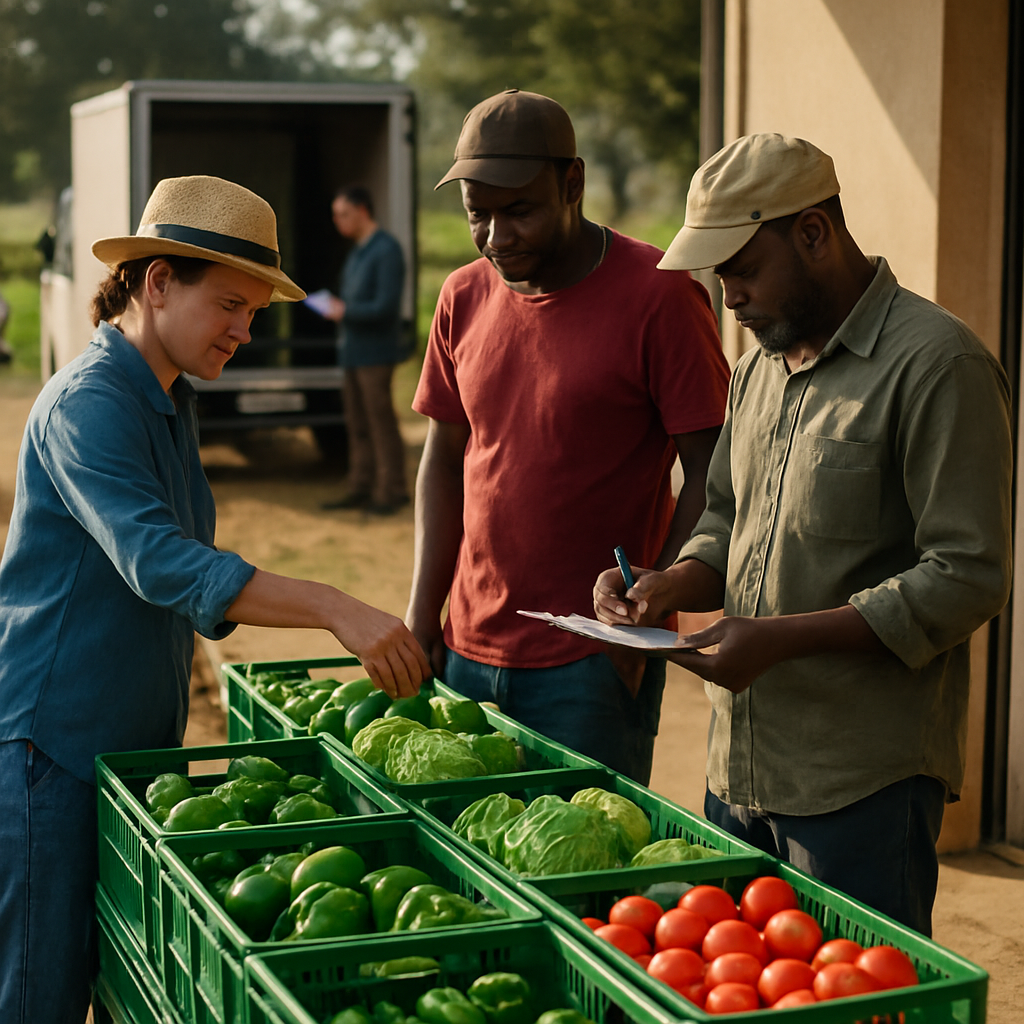
Make aggregation work economically. Pooling produce can cut marketing and transport costs and help a group meet minimum order sizes. But it works only when the group agrees in advance on collection points, schedules, grading and responsibility for losses. Farmers should know who pays for transport and packing, what happens to rejected produce and when each member will be paid. These arrangements can improve smallholder market access and make farm produce sales more predictable.
Shared infrastructure can help, but investment should address a clear commercial need. Storage, cooling equipment or a grading line is useful only if it solves a specific problem and can be maintained. In some cases, coordinating collection with a buyer or using an existing processor is more practical than buying equipment.
Negotiate terms, not just prices. An agreement should specify quantity, quality, delivery place and date, pricing method, deductions, rejection procedures and payment timing. Farmers should know whether the price is fixed, tied to a market reference or subject to later adjustment. Clear terms reduce the risk of disputes based on memory or assumptions.
Manage risk as markets change. Higher-value markets may be less tolerant of inconsistent supply or quality. Farmers can limit their exposure by testing a new outlet with a small volume, keeping existing channels open and avoiding investments that depend on an uncertain contract. Diversifying buyers and, where possible, crop timing can help protect sales when demand or prices shift. This cautious approach supports sustainable smallholder market access.
A market-entry scenario
Imagine a group of growers selling a perishable crop through separate farm-gate transactions. Rather than promise a large buyer more than they can deliver, they compare local prices, ask potential buyers about grading and delivery requirements, and calculate sorting and transport costs. This groundwork helps the group assess smallholder market access before taking on new commitments.
The group sets a collection schedule, agrees on shared quality checks and keeps a transparent record of each member’s contribution. It tests a small delivery with one buyer while continuing to sell produce that does not meet the target specifications through its usual outlets. The trial shows whether the price covers the costs and whether payment arrives as agreed.
If the arrangement works, the group can increase its volume gradually and use its delivery record in negotiations. If it does not, farmers learn which requirement or cost made the sale unworkable without risking the whole harvest. This is a practical approach to market access: test, measure, adjust and then scale.
Conclusion
Reaching higher-value markets is less about finding the perfect buyer than becoming a dependable supplier and choosing channels that reward that effort. Better market information, consistent quality, coordination and clear terms can strengthen farmers’ position, though not every premium market will be a good fit.
The key question is whether a new channel offers a better net return at an acceptable level of risk. By building their capabilities step by step, farmers can make smallholder market access a practical business strategy rather than a distant ambition.