

Practical Ways to Connect Smallholder Farmers with Higher-Value Markets in Tanzania
Introduction
For a smallholder farmer, reaching a higher-value market takes more than finding a buyer. It means deciding what to grow, meeting quality standards, assembling enough produce to sell and weighing whether the price justifies the journey. If one step goes wrong, a good harvest may still fetch little at the farmgate. Improving smallholder market access means making each step in that journey more reliable.
The challenge is not simply finding a lucrative buyer, but building a reliable route to market. In Tanzania, where crops, farms and transport conditions vary widely, solutions need to suit local production patterns. The strongest approach combines collective organisation, clear information, quality control and committed buyers. These building blocks can make smallholder market access more dependable across different regions and crops.
Team and player analysis
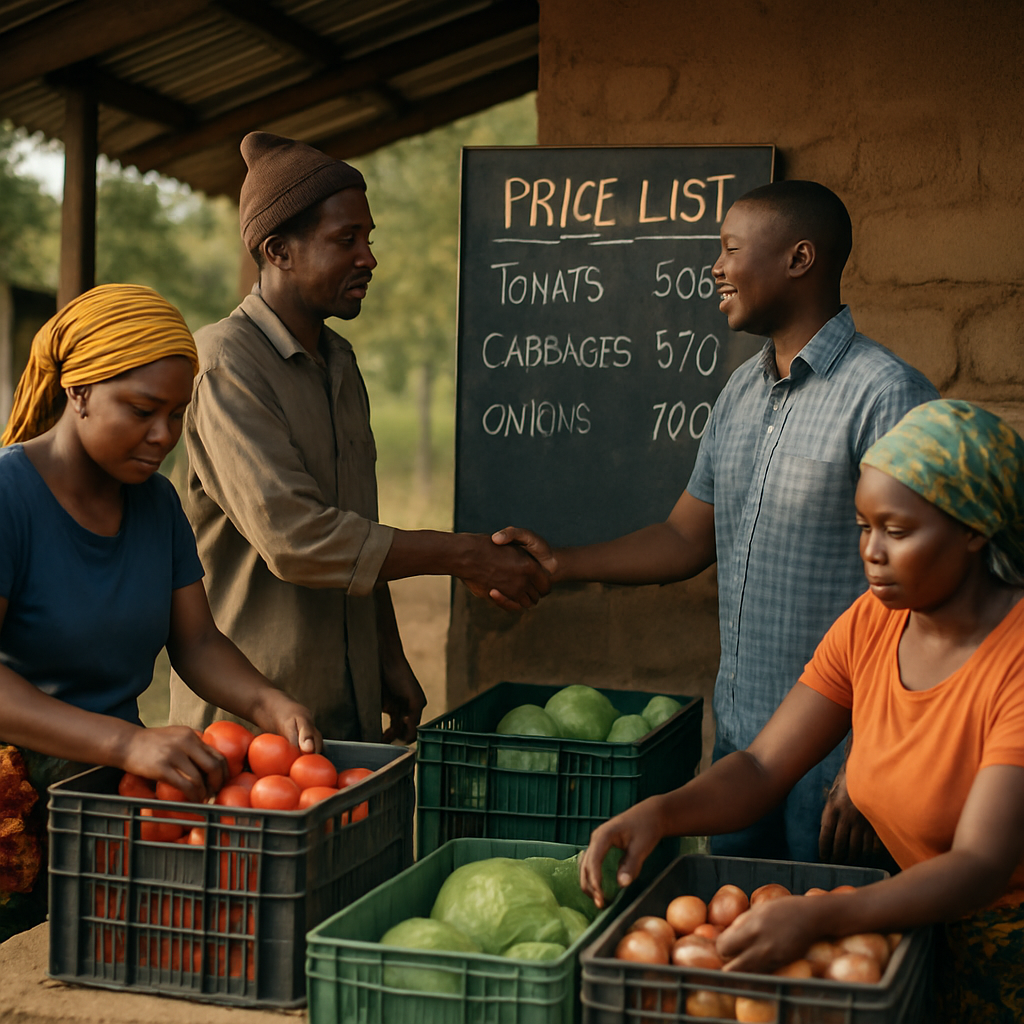
Farmers are at the centre, but they are rarely the only ones shaping the outcome. Producer groups and cooperatives can pool produce, coordinate harvests and negotiate more effectively. Buyers may prefer collecting a consistent, traceable volume from one organised point rather than visiting many scattered farms. Such coordination can improve smallholder market access while reducing the cost of reaching buyers.
Collective marketing works only when its rules are clear. Members need to know how produce is weighed and graded, how payments are calculated and how shared costs are covered. If payments are late or pricing is unclear, farmers may lose trust and sell elsewhere. Group leaders need to keep accurate records and be accountable; otherwise, aggregation may shift bargaining power without bringing farmers a fairer share of the value. Transparent procedures help ensure that collective marketing supports smallholder market access rather than creating new barriers.
Aggregators, traders and processors are not simply competitors. They can provide transport, market connections and working capital that farmers may not have. Their role should be visible and fairly compensated. The goal is not to remove intermediaries, but to make the route to market more competitive and predictable.
Buyers need sufficient volume, timely delivery and consistent quality. These expectations should be agreed before planting or collection, not raised after farmers have committed their crop. In agricultural value chains Tanzania wants to strengthen, predictable relationships reduce risk for both sides: farmers have a clearer outlet, and buyers get a more dependable supply. Clear commitments can strengthen smallholder market access by giving both parties a reason to invest in the relationship.
Key factors
Market information comes first. Farmers need timely, local details on prices, grades, demand and transport costs—not just a headline price from a distant market. Useful information helps them decide whether to store or sell, combine produce into a consignment or approach another buyer. Radio, extension networks, mobile services and group meetings can all help, as long as the information is easy to understand and trusted. Better market information makes smallholder market access more practical because farmers can compare real options before committing their crop.
Next, consider the farmgate price. A higher market price may not mean a better return after transport, sorting, fees, spoilage and delayed payment are factored in. Comparing net returns gives farmers a sounder basis for choosing a buyer. Where possible, groups should make weighing and grading visible and explain any deductions. Tracking farmgate prices over time can help farmers judge whether an offer is fair and whether smallholder market access is translating into better returns.
Post-harvest handling also matters. Drying, cleaning, sorting, packaging and storage can protect quality and reduce losses. The right investment depends on the crop: a shared drying surface or basic storage may be more useful than expensive equipment that goes unused. Standards should be practical, too. Buyers need to explain their quality requirements, and farmers need the training and tools to meet them.
Aggregation infrastructure can link small volumes to larger markets. Collection points, warehouses and transport arrangements are useful when they are located and managed with farmers’ needs in mind. Storage is not always profitable: fees, quality risks and falling prices all matter. Warehouse receipt arrangements or shared facilities may help, but they require trusted management, clear records and access to finance. Well-run facilities can support smallholder market access by helping groups assemble and protect market-ready produce.
Finance supports the whole process. Without cash for inputs, harvesting or transport, farmers may have to sell immediately, even when waiting could bring a better return. Credit linked to a credible purchase agreement can help, but contracts should spell out repayment terms, quality rules and what happens if the buyer fails to collect. Financial products should match seasonal cash flows rather than assume farmers can repay on a fixed schedule.
Market connections must also be inclusive. Women and young farmers may contribute substantially to production while having less say in group decisions, payments or land-based collateral. Registration rules, meeting times, payment methods and leadership structures can either encourage participation or quietly exclude them. Market arrangements are stronger when the people who grow and handle the crop can influence their terms.
Match scenario
Imagine a group of farmers supplying a buyer who needs a consistent crop. The first step is not to promise a premium, but to agree on a plan. Farmers and the buyer set the crop specifications, estimated volume, delivery window, weighing method and payment schedule. The group chooses a collection point and appoints someone to keep records. Agreeing on these details in advance gives smallholder market access a practical foundation.
As harvest approaches, farmers receive updates on demand, and the buyer confirms whether the expected volume is still needed. The group sorts and handles produce according to the agreed standard. At collection, members can observe weighing and grading. Records show each farmer’s delivery and any deductions, and payment follows the agreed schedule.
This process can make the deal fairer, but it cannot remove every risk. Weather may disrupt supply, transport may fail and prices may change. A sound agreement explains how to handle shortfalls and delays, and avoids terms farmers cannot understand. The group should also compare the final net return with other available options. Loyalty is worthwhile only while the deal remains credible.
After the sale, both sides review how it went. Did the produce meet expectations? Were the costs justified? Did the buyer collect on time, and were farmers paid as agreed? This review can help turn a single transaction into a lasting relationship—or show that the arrangement needs to change.
Conclusion
Higher-value markets depend on reliable performance, not slogans. Smallholder market access improves when farmers can pool produce without losing control of it, understand how prices are set, protect quality after harvest and agree on clear terms with buyers.
No single intervention can achieve all this. Progress depends on accountable producer groups, useful market information, practical post-harvest handling, seasonal finance and transparent buyer partnerships. When these elements work together, farmers gain more than a route to market: they gain a stronger position within it.