

Same Slot Name, Different Edition: Which Release Are You Actually Playing?
Introduction
A slot title may seem to have a fixed identity: one name, one set of reels, one familiar feature. But the same title can appear in several editions, with differences that go beyond a new background or sound effect.
The title alone doesn’t tell you which version is running. An edition may have different feature rules, a different theoretical return setting, or a presentation tailored to a particular platform or market. Think of it as different line-ups sharing the same badge, rather than a sequel.
So the question isn’t just which game is on screen, but which release and configuration you’re playing. Check the information panel, game rules, version label and, where available, the stated return-to-player figure.
Analysis: the editions sharing the name
The original release establishes the game’s identity: its symbols, reel layout, main bonus feature and visual style. Later editions may keep those familiar elements while changing how the game works.
A revised edition might change the pace or structure of play, add features, alter bonus conditions or present wins differently. The reels may look the same, but the rules show whether the game itself has changed.
Some games also have market-specific configurations. Operators or jurisdictions may use different return settings for the same title. The name and interface may stay the same, so it’s important to check the exact configuration.
A platform may also package an edition differently. The layout, animation speed and controls can vary between desktop and mobile, or across software releases, without affecting the game’s core mathematics. These are presentation changes, not necessarily signs of a different game model.
It’s important to distinguish between these changes. A cosmetic refresh isn’t the same as a rule change, and a rule change doesn’t automatically mean the return setting has changed. The title is only a starting point; the game information and release notes provide the details.
Key factors: what separates one release from another
Version and provider details. Check the game’s information or help screen for a version number, build identifier, copyright line or provider name. These details can help distinguish a refreshed release from an older one with the same title. If they’re missing or unclear, the title alone won’t tell you which version you’re playing.
Rules and feature triggers. Read the stated rules rather than relying on memory or appearance. Check how bonus rounds are triggered, what special symbols do, whether features can retrigger and whether any limits apply. A familiar bonus name doesn’t guarantee the same conditions.
Return to player. The theoretical return-to-player figure is a long-run average based on stated assumptions. It doesn’t predict a short session or guarantee an individual result. If two editions show different figures, they’re different configurations, even if the reels and artwork look the same. Check the game information rather than guessing from the title.
Volatility and distribution. Return and volatility describe different things. Two versions may have similar theoretical returns but distribute outcomes differently: one may offer smaller wins more often, while another concentrates more of its potential in less frequent results. Don’t guess a game’s profile from a few rounds unless reliable information is available.
Jurisdiction and operator settings. Local requirements and the way a game is supplied can affect its rules and available configurations. The same product may therefore have different approved settings in different venues. For a meaningful comparison, identify the editions, settings and relevant market.
Interface and device. On mobile, menus may hide details or show less information. Animation, button placement and loading behaviour can also vary by device. Treat these as presentation differences, then check whether the rules or stated settings have changed too.
The clearest comparison uses several indicators. A different version label and bonus rule point to a distinct release; a redesigned menu alone doesn’t. The goal is to separate changes to the experience from changes to the game itself.
Match scenario: two screens, one title
Imagine two players open a game with the same name. The reels, symbols and soundtrack look familiar, so each assumes they’re playing the same edition. It’s like judging a match by the shirts before checking the team sheets.
One player checks the information panel and finds a different version identifier and return setting. The other notices a new-looking interface but hasn’t opened the rules. The first has evidence of a configuration difference; the second has only spotted a presentation change.
Next, compare the feature rules. If a bonus triggers under different conditions, the editions differ in a way that affects play. If the rules match and only the layout has changed, the safer conclusion is that the interface has been updated, not the underlying game.
The same applies across platforms. Don’t assume a mobile release has different odds because it feels faster, or that it’s identical because the artwork hasn’t changed. Check the version and displayed settings before drawing either conclusion.
Conclusion
A slot title that appears more than once signals a shared identity, not necessarily a shared edition. To compare versions, check the version information, rules, features and stated return setting. Keep interface changes in a separate category.
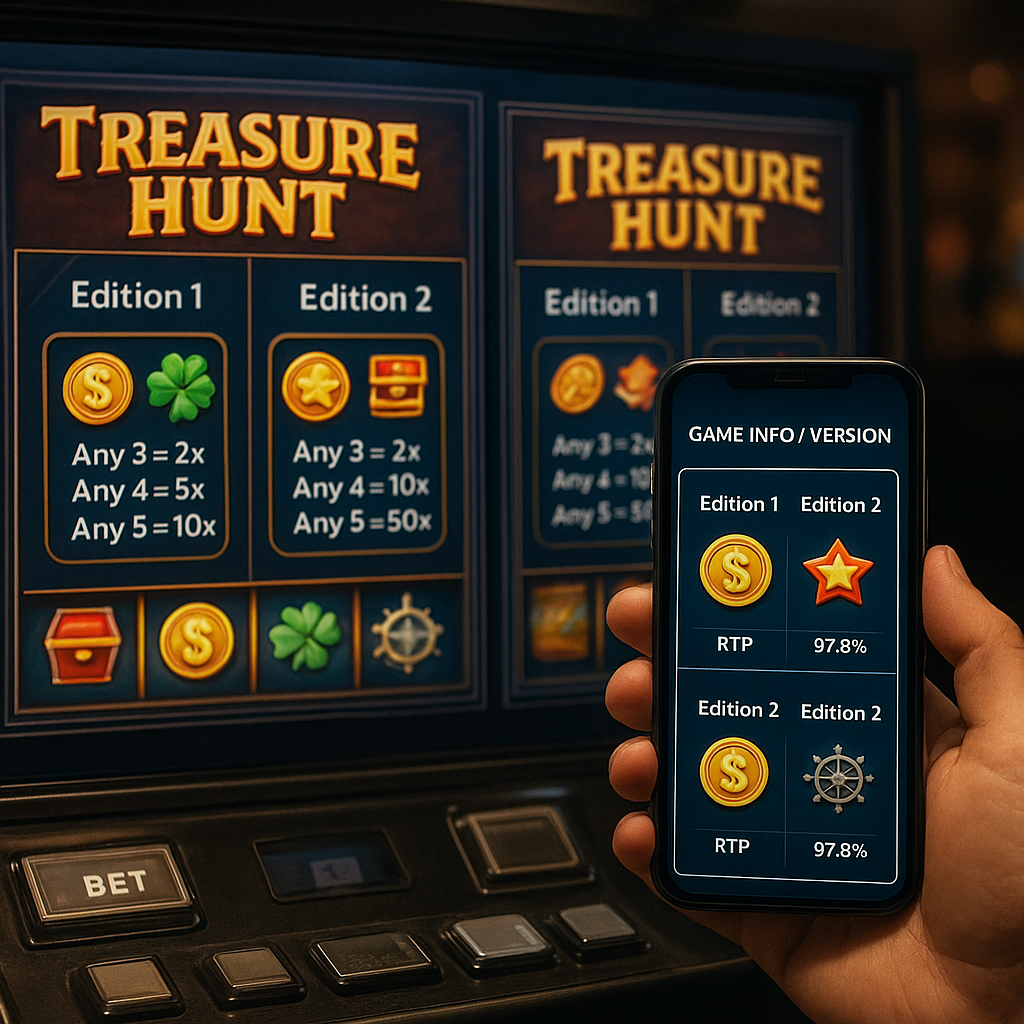
This avoids two common mistakes: treating every visual refresh as a new game and assuming every familiar title is the same release. Identify the configuration first, then assess what has changed. When the screen looks familiar but the details may differ, start by reading beyond the name.