

Introduction
A strong harvest is only part of a farm’s performance. If yields rise for a few seasons while the soil loses organic matter, structure or nutrients, those gains may come at the expense of future production.
Sustainable crop production means protecting the soil’s ability to grow crops while making good use of each season. Water, nutrients and field operations need to be managed as parts of the same system, rather than treating yields and soil health as competing goals. In practice, sustainable crop production depends on choices that protect productive capacity over time.
There is no universal formula. Soil type, rainfall, machinery, markets and labour all affect what works. Still, a consistent set of practices can support reliable harvests without degrading farmland and help make sustainable crop production practical across different farming conditions.
Balancing competing demands
Crops need nutrients and water at particular stages of growth. At the same time, soil needs cover and time to maintain its structure, support biological activity and replace what harvests remove. Balancing these demands is central to sustainable crop production.
Managing these needs separately can compound problems. Repeatedly planting the same crop can increase pest and disease pressure, while bare soil is more exposed to wind and heavy rain. Extra fertiliser may address a nutrient shortage, but it cannot repair compaction or restore lost soil structure on its own.
Crop rotation can help. Alternating crops with different rooting patterns and nutrient needs can disrupt some pest cycles and spread pressure across a field. Legumes may also add nitrogen, although the amount available depends on the crop, growing conditions and residue management. This makes rotation a useful part of sustainable crop production, though results depend on the whole crop sequence.
Rotation will not increase yields every year. Farmers need to weigh crop prices, equipment, labour and local growing conditions. A varied crop sequence can, however, reduce reliance on a single crop and exposure to the risks associated with it.
Tillage presents another trade-off. It can prepare a seedbed and control weeds, but repeated or poorly timed passes may break down soil aggregates and leave the surface exposed. Conservation agriculture aims to limit soil disturbance, maintain ground cover and diversify crops. The right approach depends on the farm, and sustainable crop production requires adapting it to local constraints.
Key factors
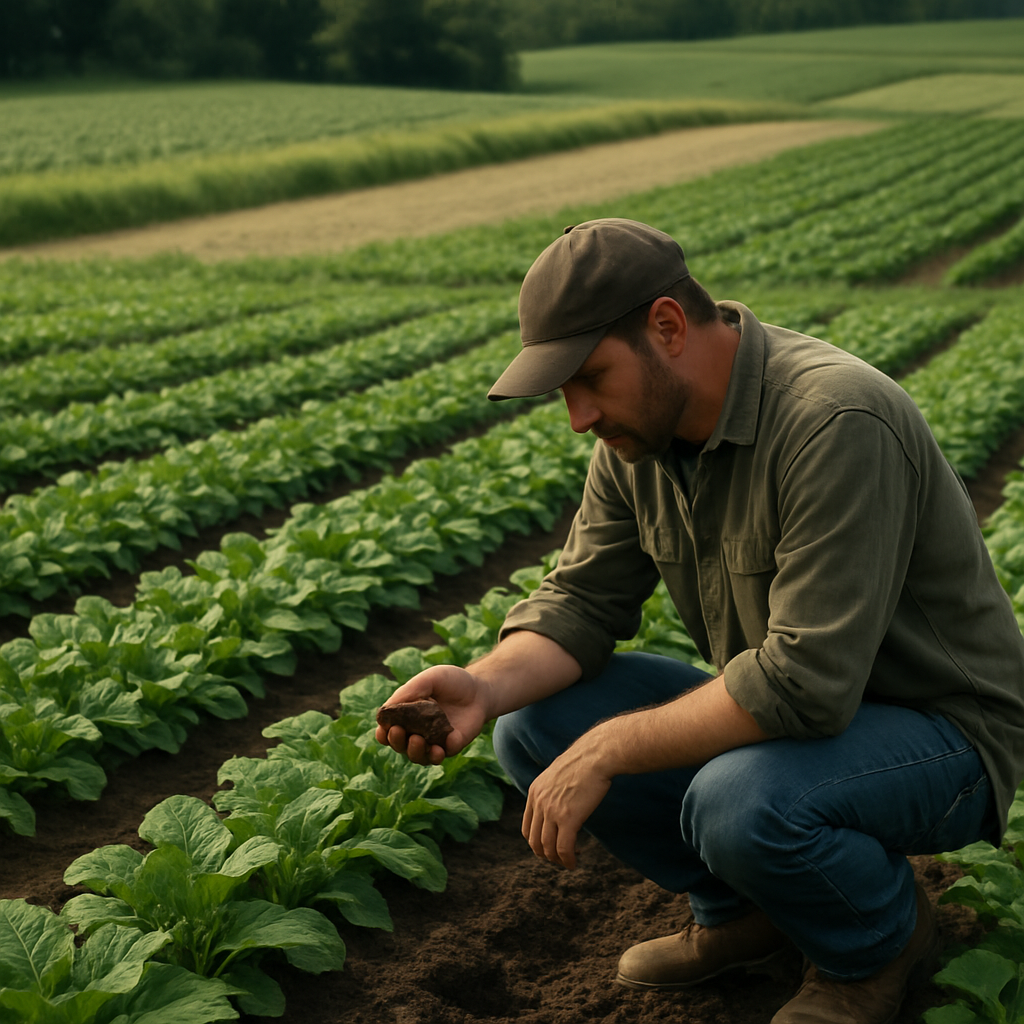
Effective soil fertility management starts with understanding what a field can provide. Soil tests, crop history and observations of plant growth help identify nutrient needs. Farmers can then match applications to the crop and avoid both shortages and unnecessary inputs. This kind of monitoring supports sustainable crop production by guiding decisions with field-specific evidence.
Timing and placement matter as much as application rates. Applying nutrients when crops can use them reduces the risk of losses. On some farms, split applications can better match nutrient supply to crop growth. A nutrient plan should also account for what harvest removes in grain, fruit or forage.
Compost and well-managed manure can add nutrients and organic matter. Organic soil amendments can support soil structure and fertility, but their value varies, so farmers should test them and consider their nutrient content, maturity, storage and application timing. These amendments are useful tools, but they do not replace measuring what the soil and crop need. Used appropriately, they can contribute to sustainable crop production.
Keeping living roots or crop residues in the field for more of the year can protect the soil surface and provide food for soil organisms. Cover crops may also capture nutrients that might otherwise be lost. Their success depends on choosing suitable species and planting dates, and on having enough water for both the cover crop and the following cash crop.
Where wind or runoff threatens fertile topsoil, erosion control is essential. Residue cover, contour farming, grassed waterways and well-placed buffer strips can slow water and trap sediment. The right measure depends on how water moves across the field, and can help sustain crop production over the long term.
Reduced tillage can conserve moisture and lower fuel and labour demands, but it may change weed, pest or disease pressure. Some farms may need targeted tillage or other weed-management tools to maintain production. Assess the system by its results over the whole season, including input needs and soil condition, rather than by a label.
Smallholder yields also need to be considered in the context of the whole system. Farmers with smaller plots may have limited access to equipment, credit, storage or reliable inputs. This can make labour-intensive practices difficult, even when they are agronomically sound. Locally available residues, mixed cropping and shared services may help, but recommendations should take the cost and timing of adoption into account. Sustainable crop production should be achievable within these practical limits.
Ongoing measurement helps keep a strategy on track. Yield records matter, as do soil tests over time, notes on ponding or erosion, and signs of compaction. One season rarely shows whether a practice has worked: weather can mask the underlying trend.
Putting the practices into practice
Consider a field that has a dry start to the season followed by intense rain. A bare, heavily disturbed surface may lose moisture early and shed water later, carrying soil and nutrients away. A rotation that leaves crop residue, combined with suitable cover and reduced disturbance, may help the field absorb rainfall and limit losses.
This is a possible benefit, not a guarantee. In dry regions, a cover crop can compete with the next crop for scarce water if it is not terminated at the right time. In wet seasons, machinery on saturated ground can compact the soil, even under a conservation plan.
Farmers can adapt their systems before conditions force costly corrections. They can choose cover crops and termination dates to suit local water supplies, keep machinery off fields when soils are too wet, and adjust nutrient timing to crop development. The aim is resilience: reducing severe losses when conditions turn against the plan.
Compare results across several seasons, including both yields and the inputs needed to achieve them. A modest yield increase alongside less erosion and more stable soil moisture may be real progress. A record harvest followed by declining soil condition may not be.
Conclusion
Improving yields without degrading farmland depends less on one standout technique than on coordinating several practices. Crop rotation, careful nutrient planning, organic inputs, ground cover and erosion control work best when they suit the same field conditions and support one another.
Sustainable crop production cannot guarantee higher yields every year. It offers a more durable measure of success: meeting today’s needs while preserving the soil, water and productive capacity required for future seasons.