

Soil-Smart Crop Rotation Strategies for Sustainable Small Farms
Introduction
On a small farm, choosing the next crop is about more than what will sell. Farmers also need to consider what the previous crop took from the field, what remains in the soil and what it needs to support another harvest.
Crop rotation is more than a planting schedule. A well-planned rotation helps balance nutrient use, protect soil structure and disrupt pests, while leaving room to adapt to changes in weather, labor and markets. When planned for local conditions, crop rotation can support soil health and sustainable crop production.
There is no universal template. A four-year plan that works on well-drained loam may fail on wet clay, and even a sound rotation can fall short if the soil is left bare or fieldwork is poorly timed. Strong plans start with local conditions and use crop diversity to build resilience. Treat crop rotation as a flexible framework, not a fixed calendar.
The crop line-up: assigning roles in the rotation
Think about each crop’s role, not just its place in the sequence. A demanding crop such as corn or a brassica may use substantial nutrients. A legume can add biologically fixed nitrogen, while a small grain provides dense roots and a useful window for establishing a cover crop. Crop rotation works best when these different roles complement one another over time.
These roles are not interchangeable. Legumes can improve nitrogen availability, but they do not replace every nutrient removed with the harvest. Grains and grasses help hold soil and capture leftover nutrients. Deep-rooted crops may reach water and nutrients beyond the reach of shallower roots. This diversity makes crop rotation a useful tool for nutrient management.
Crop families matter, too. Tomatoes, peppers and potatoes are all nightshades, so switching between them does little to interrupt pests and diseases that affect the family. Track botanical families and known disease risks, rather than simply changing the crop from one year to the next. Thoughtful crop rotation can create a longer break between related crops and contribute to pest control.
Small farms need to fit these roles around their production needs. A diversified vegetable farm may depend on repeated successions of high-value crops, while a mixed farm can use forage or grain phases to build organic matter. The best rotation is one the farm can manage consistently, with enough flexibility for planting delays or a missed harvest. For small farms, crop rotation should account for labor, equipment and market needs as well as soil health.
Key factors: soil, nutrients and pest pressure
Soil health ties the rotation together. Farmers can assess it through soil tests, crop performance, water infiltration, earthworm activity and the stability of soil aggregates. No single indicator tells the whole story, but regular measurements help separate long-term trends from seasonal fluctuations. These observations can show whether crop rotation is helping the field recover and remain productive.
Nutrient management starts with what leaves the field. Harvested crops remove nutrients; roots and residues return some to the soil as they break down. A legume phase may reduce the need for purchased nitrogen in a following crop, but phosphorus and potassium still need attention. Use soil tests and crop-removal estimates to guide your plan.
Cover crops keep living roots in the soil between cash crops. A winter cereal can capture nutrients that might otherwise leach away, while a legume cover may add nitrogen. A mix can serve several purposes at once. But cover crops require seed, planting time and timely termination, and their water use must suit local conditions. Include cover crops in crop rotation where they fit the farm’s schedule and resources.
Rotation can also reduce pest pressure by lengthening the interval between related crops. Moving a crop family to another field may limit some soilborne pathogens and crop-specific pests, especially when the break is long enough and host weeds are controlled. It is not a cure-all: mobile insects, windborne diseases and pests with broad host ranges may persist despite a change in sequence.
Residue management and tillage also affect results. Leaving crop residue can reduce erosion and conserve moisture, but heavy residue may make planting harder or harbor disease in some systems. Make these decisions crop by crop; neither maximum residue nor minimum tillage is right for every field. Crop rotation should be coordinated with these practices to protect soil without creating new problems.
A rotation must also make economic and practical sense. A crop that improves soil but cannot be harvested, stored or sold may not be a lasting choice. On a small farm, labor, equipment, irrigation and access to seed can matter as much as agronomic theory. A workable crop rotation balances these limits with the long-term benefits of sustainable crop production.
Season scenario: building a workable sequence
Consider a small vegetable farm with four fields. A heavy-feeding crop performs well, but weed and soilborne disease pressure is increasing. Rather than prescribe a fixed four-year plan, start by mapping crop families, harvest windows and field histories. Then identify where a break crop could realistically fit. This gives crop rotation a practical starting point grounded in the farm’s own records.
One possible sequence starts with a demanding vegetable crop, followed by a small grain undersown with a legume or another suitable cover. The next season might bring a legume crop or forage phase, followed by a crop from a different family with lower nutrient needs. Return to the original vegetable family only after an adequate break, based on the farm’s pest and disease history.
The plan also needs a backup. If a wet spring delays grain planting, a fast-establishing cover or another short-season crop may keep the soil covered without disrupting the farm’s harvest schedule. If a cover crop uses too much moisture before a dry summer planting, adjusting its termination date may matter more than following the rotation on paper. Flexible crop rotation can help farmers respond to these changing conditions.
Recordkeeping helps turn the sequence into a learning process. For each field, note planting and termination dates, yields, fertilizer inputs, pest problems and unusual weather. Regular soil tests can show whether nutrient levels and organic matter are moving in the right direction. Yield records can show whether a soil-building phase is improving crop performance.
The real test is not whether every field follows a perfect plan. It is whether the farm can keep its land productive and reduce avoidable pressure. A rotation works when it holds up under imperfect conditions and can be adjusted without losing its basic logic.
Conclusion
Soil-smart crop rotation balances biology with the needs of the business. Diverse crop families, active roots, thoughtful nutrient planning and well-timed breaks between related crops can support sustainable production. Their success depends on soil type, climate and the farm’s capacity.
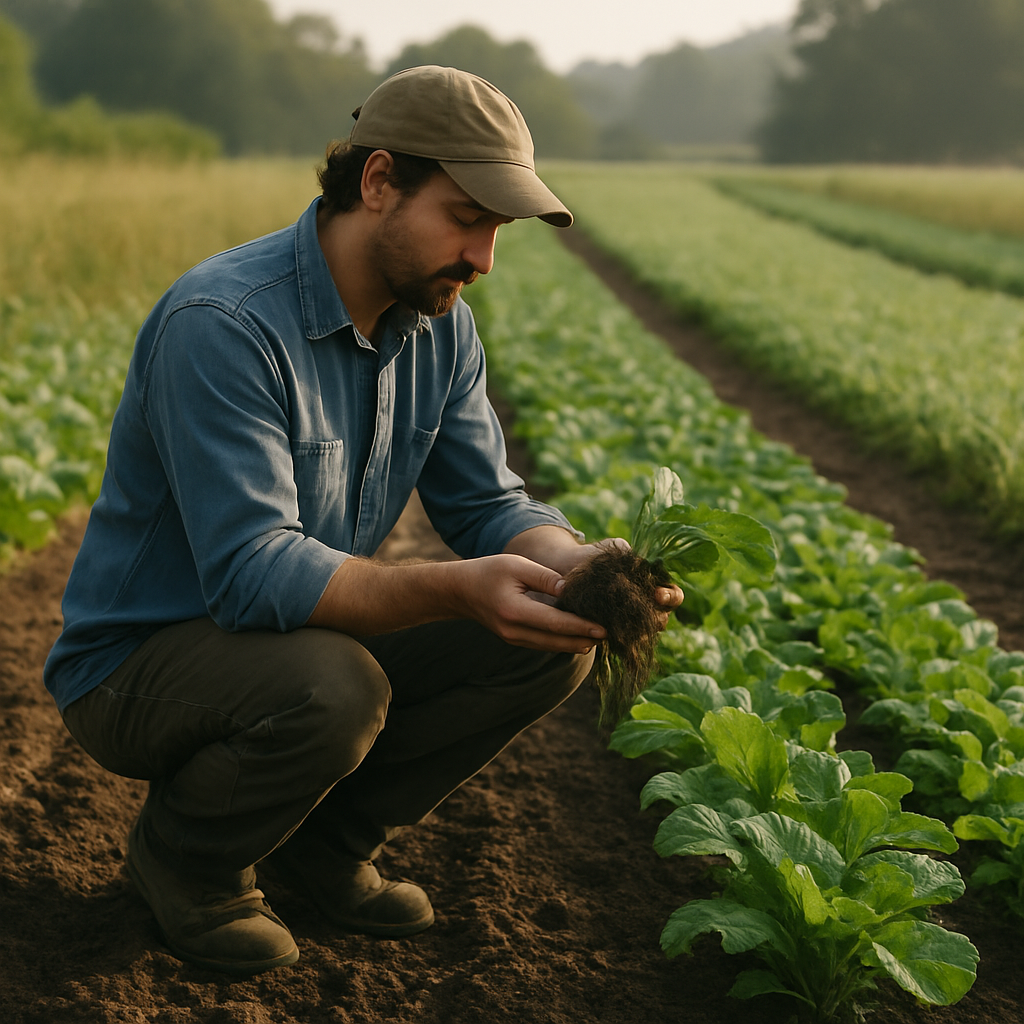
For small farms, a clear but adaptable plan is usually the most durable. Track what each crop takes from and returns to the soil, protect the ground between harvests where practical, and use each season to guide the next decision. Rotation is not a fixed formula; it is a long-term way to help each field support the crops that follow.