

Introduction
A software certificate and a casino operator’s licence may appear side by side, but they answer different questions. A certificate relates to software or a specific technical process; a licence concerns the business providing gambling services under a particular regulatory framework.
This distinction matters because a certificate can be easy to overinterpret. It may show that a specific product was assessed against certain criteria, but it does not automatically prove that the casino operator is licensed or overseen where a player lives.
Think of them as separate credentials, not two versions of the same one. To understand what either means, check who issued it, what it covers and which jurisdiction it relates to.
Analysis of the two sides
A software certificate usually covers a specific item, such as a game, software version, random-number function or other technical component. Its scope depends on the certificate and the assessment behind it. A document naming one product or version does not prove that every game, system or service on the casino platform has been assessed.
The word “certificate” alone tells you little about the assessment. Check the issuing organisation, the product named, the tests or criteria covered, the date and status, and any conditions or exclusions. Without these details, it is difficult to know what was examined.
An operator’s licence, by contrast, concerns the company or legal entity providing gambling services within a specific regulatory framework. The relevant authority and rules vary by jurisdiction. A licence may show whether the entity is permitted to operate in that market and what obligations or oversight apply. Check its meaning with the regulator for the relevant jurisdiction.
These documents cover different levels of scrutiny. A game may be certified even when the operator’s status is unclear. Conversely, an operator may hold a licence that says nothing about the full range of services it offers. Neither document replaces the other.
Key factors
Start with scope. Check the exact name of the entity or product covered. A certificate for software does not, by itself, identify the casino operator. Similarly, a licence held by one company should not be assumed to cover another just because their brands appear connected.
Check the jurisdiction. Regulatory permissions are not automatically valid everywhere. A licence applies to the territory and activity it covers, while a software assessment has its own scope. A badge on a website alone does not establish that the operator is authorised where a particular player lives.
Check the version and date. Software changes, and documents may relate to a particular build, product or assessment period. A certificate may be genuine but not cover the current version or every current feature. Check whether it names the version and whether its status can be verified.
Look at the issuer and supporting details. A logo or seal may look official, but it does not show what was tested or whether the document is current. Look for a named issuer, a traceable reference and a description of the assessment. To check an operator’s licence, consult the regulator’s records where available.
Keep the product separate from the service. A casino may involve several entities and systems, including the operator, software supplier, platform and other service providers. A certificate for one component does not necessarily cover the rest. Ask which part of the arrangement the document refers to.
A certificate is evidence, not a guarantee. It may support a limited claim about an assessment, but it cannot promise flawless operation, fair treatment in every situation or responsible conduct across the entire business. A licence is a separate regulatory status, not a guarantee that every part of the service is risk-free.
Match scenario
Think of the documents as having different roles. A software certificate relates to the technical side: it may show that a named component was reviewed using a stated method. An operator’s licence relates to the business and the permission or oversight that applies in a particular jurisdiction.
Neither document is more convincing just because its badge looks more impressive. If you want to know whether a game component was assessed, check the certificate’s scope and issuer. If you want to know whether the casino operator is authorised in a particular market, check the operator’s identity and licensing status.
Problems arise when the details do not match. A site may prominently display a certificate but make the operator’s legal name or licensing details hard to find. Or it may show a licence without identifying the company that holds it or the market it covers. In either case, the documents answer different questions, and you should not assume the missing information.
Check the details in order: identify the operating entity, determine the relevant jurisdiction, and verify the licence through an appropriate regulatory record where available. Then assess any software certificate separately, matching its issuer, product, version and scope to the claim. A certificate cannot resolve uncertainty about the operator.
Conclusion
A software certificate can provide useful information about the software it covers. On its own, it does not show that the casino operator is licensed, that a licence applies in every jurisdiction or that the entire service has been assessed.
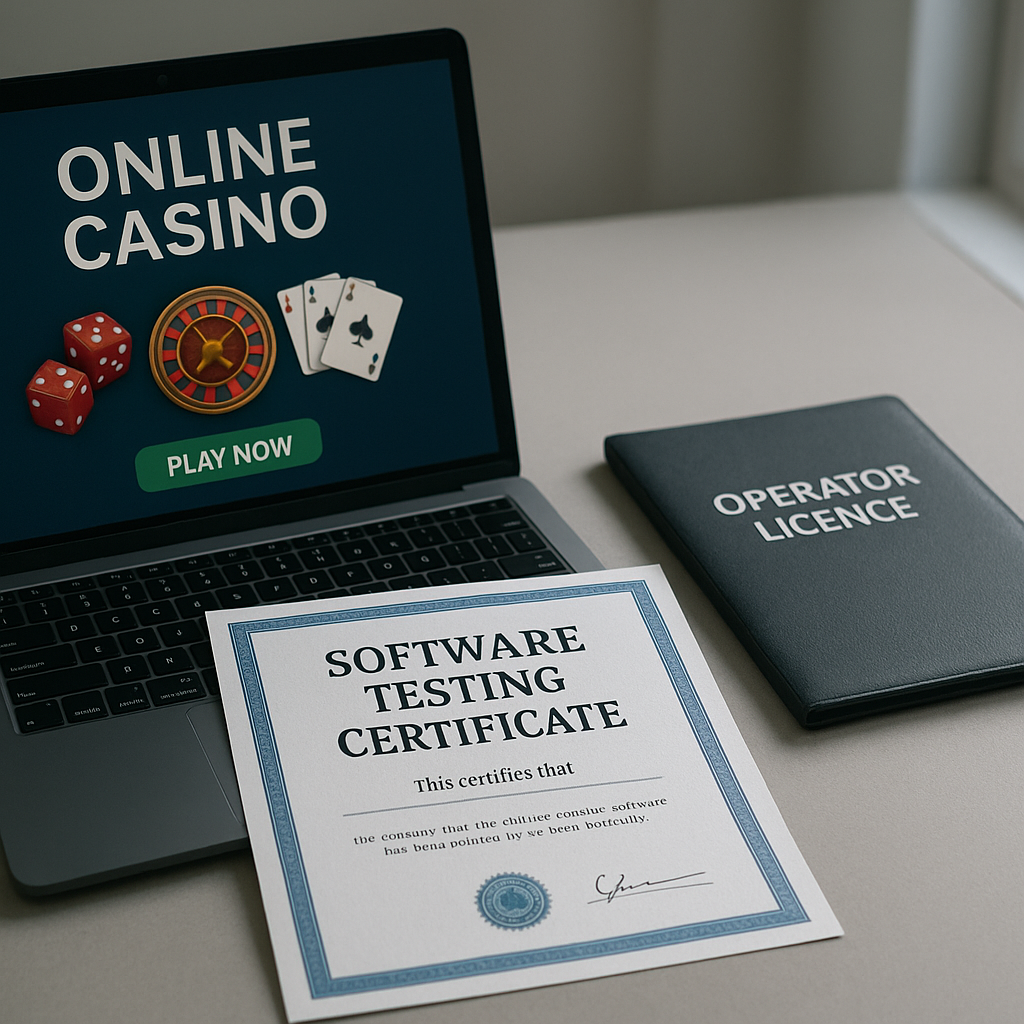
The distinction is straightforward: certification concerns a defined technical assessment; licensing concerns an operator within a regulatory framework. Treat each document as evidence for its own purpose, check its scope and do not use one credential as proof of the other.