

Choosing Crop Insurance That Fits Your Farm and Climate Risks
Introduction
A crop insurance policy is put to the test when a difficult season upends a farm’s plans. A dry spring, late frost or weeks of heavy rain can turn a sound production plan into a financial problem. The right protection depends on which risks are most likely to affect the farm.
Choosing a policy is less like buying a standard product and more like preparing for conditions that vary from field to field. Crop insurance can help stabilize income after a covered loss, but it cannot prevent every consequence of bad weather, low prices or production decisions. The key question is whether coverage matches the risks that could threaten the farm’s cash flow.
Farm profiles: different sides of the same contest
A large operation growing one or two commodities may be especially vulnerable to widespread events. If drought hits the region, several fields may suffer at once. A policy based on area-wide results may offer different protection from one tied to the farm’s individual yields. Large operations may have detailed records and more options, but they are still exposed to losses that affect many fields at once. Crop insurance options should be compared with the scale and pattern of those potential losses.
Diversified farms face different trade-offs. Growing several crops, staggering planting dates or raising livestock alongside crops can spread risk. But each enterprise may have its own coverage rules, deadlines and loss calculations. A crop insurance policy that protects the main crop well may leave a smaller but important source of income exposed.
For smallholder farms, affordability, access and simplicity can be decisive. A product that requires extensive historical records may not suit farms with inconsistent yield data. Index-based coverage can be easier to administer in some settings, but a farmer may not receive a payment if the index fails to reflect conditions on their farm. When comparing crop insurance, check whether the product’s requirements are manageable.
These profiles are not a guide to one ideal policy. They are a starting point for considering how a farm earns money, how losses occur and how much financial strain it can handle before a claim is paid.
Key factors
Start with the hazard, not the product name. Identify the farm’s main climate risks by crop, field and growth stage. Drought during establishment differs from heat during flowering or excess rain near harvest. Local history can reveal recurring threats, but changing weather patterns mean past averages may not reflect future seasons. Assessing climate risk can help narrow the crop insurance options worth considering.
Consider how hazards interact. Heavy rain can delay planting, increase disease pressure and make fields difficult to access at harvest. A hot spell can worsen water stress when irrigation is limited. Focus on the loss pathways that matter most to the farm, rather than choosing a policy based on how broad its name sounds.
Understand what the policy measures. Yield-based products generally compare production with an established benchmark. Revenue protection can account for changes in yield and, depending on the contract, price. Area-based and index products use regional yields or weather measurements. These may be efficient, but they carry basis risk: a farm can suffer a real loss without meeting the payment trigger, or receive a payment when its fields do better than the index suggests. Crop insurance products can differ significantly in how they measure a loss.
Ask how the benchmark is set, what records are required and when losses must be reported. The policy’s definition of production, how it treats quality damage and when inspections take place can matter as much as the stated coverage limit. Check whether insurance coverage applies to all planted acres, only named crops or specific planting windows.
Read the boundaries carefully. Exclusions may cover certain causes of loss, preventable damage, late planting or failure to follow specified farming practices. Terms vary by location and product, so relying on a neighbour’s experience can be costly. A covered weather event does not automatically mean every related expense or lost sale is insured. Review policy exclusions before choosing crop insurance.
Check deductibles, waiting periods, claim deadlines and how payments are calculated. Ask what evidence is required, who assesses damage and how disputes are handled. A policy that is difficult to claim against may offer less practical security than its summary suggests.
Compare the premium with the financial risk. A lower premium may mean a higher deductible, narrower coverage or a trigger that is less closely linked to the farm’s losses. Compare what the farm would pay after a moderate loss with the maximum benefit after a severe one. The right balance depends on savings, debt, access to credit and the ability to recover next season. Compare premium costs alongside the likely benefits of each crop insurance option.
Public subsidies, where available, can change the calculation, but eligibility and terms vary. Consider premiums alongside other risk-management measures, such as crop diversification, drainage, irrigation, resilient varieties and emergency reserves. Insurance works best as a complement to these measures, not a substitute for them.
Check the service, not just the contract. Before enrolling, learn about the insurer’s claims process, record requirements and communication practices. In a stressful season, knowing how to report a loss and when to expect a decision can matter as much as the stated coverage.
The season’s match scenario
Imagine a farm that plants a rain-sensitive crop after a wet spring, then faces a dry spell during a critical growth stage. A yield policy may pay if final production falls below its insured threshold, but it may not cover every cost caused by delayed planting or disrupted fieldwork. A weather index may pay only if rainfall at its designated station crosses the contract’s trigger. Understanding these details is essential when selecting crop insurance.
Now suppose heavy rain arrives near harvest. The crop may suffer quality damage or become difficult to harvest, but coverage depends on the policy’s definitions, exclusions and evidence requirements. A farmer who has checked reporting deadlines, documented field conditions and understood the claims process is better prepared than one who first reviews the terms after damage occurs.
Compare policies across several plausible seasons, not only a dramatic worst-case scenario. Consider how each option handles a moderate yield loss, a regional weather event and a farm-specific failure that an index might miss. The goal is coverage that is clear and financially useful for the risks the operation is likely to face.
Conclusion
Choosing crop insurance is about finding the right fit, not maximizing coverage. The right policy reflects the farm’s crops, location, records and ability to withstand losses. It also makes clear what is measured, what is excluded and how a claim leads to payment.
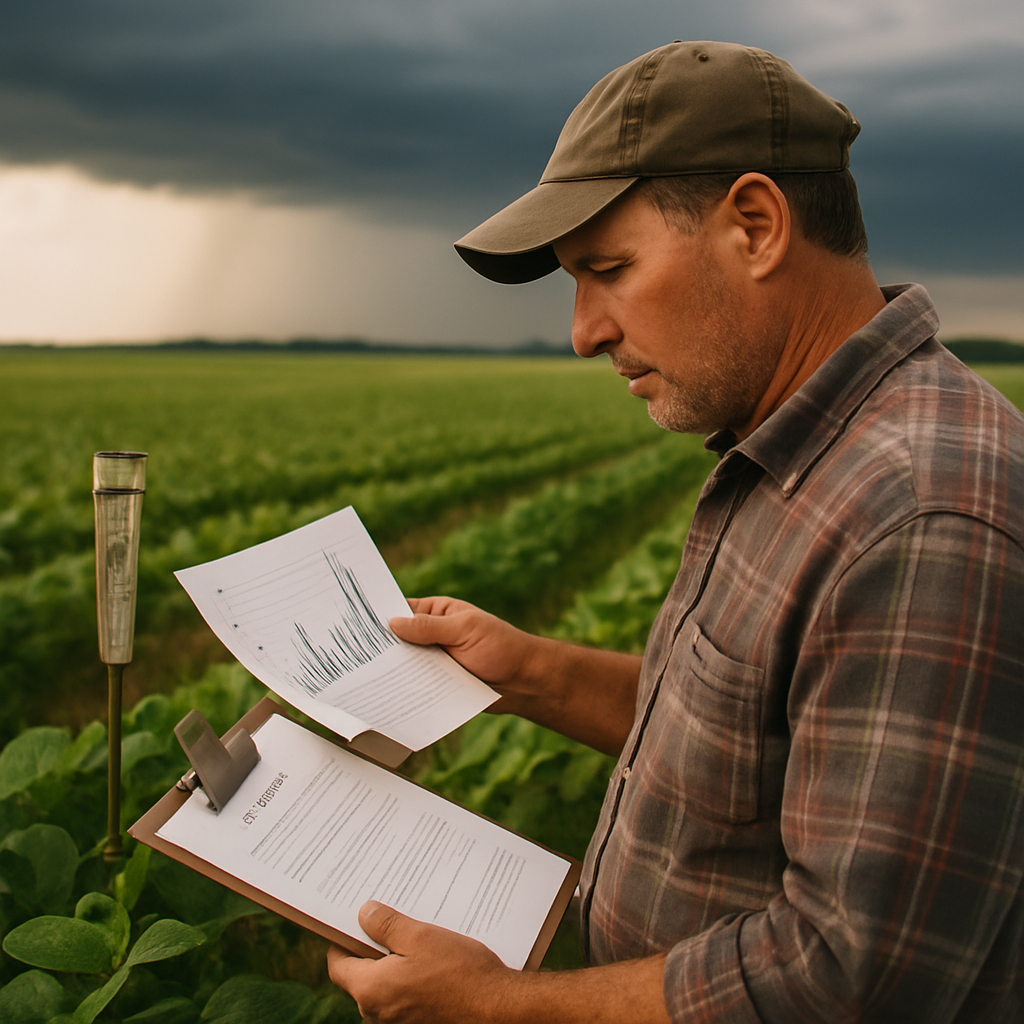
Compare contracts on those terms before focusing on price. As climate risks change and seasons become less predictable, the strongest protection is not the promise that sounds most comprehensive, but coverage whose limits and triggers make sense for the farm.