

Introduction
For a small farm, a failed harvest is rarely an isolated setback. It can leave less money for seed and labour, make loan repayments harder and limit options when the next planting window opens. Choosing crop insurance for smallholders is therefore about more than finding a policy. It means deciding which losses the farm can absorb and which could threaten its future.
Insurance cannot bring rain on time or guarantee a profitable market price. It transfers some defined risks in exchange for a premium, helping the farm recover after a damaging event. For crop insurance for smallholders to be useful, it should fit the farm’s needs and budget. The strongest approach combines suitable cover with practical steps to reduce exposure before a claim is needed.
Analysis of farm strategies
There are two parts to consider: insurance and the farm’s own risk-management measures. Insurance may provide financial support for a covered loss, subject to the policy’s terms. Measures such as crop diversity, water planning, savings, careful timing and reliable record-keeping help manage risk in other ways. Neither replaces the other.
Traditional indemnity insurance measures damage or yield against an insured threshold. This can make the link between a farm’s actual loss and its payout easier to understand, but inspections and verification may take time and cost money. When comparing crop insurance for smallholders, ask how losses are measured, what causes are excluded and what evidence is required.
Weather-index insurance pays when an agreed measure—such as rainfall at a designated station or a satellite-derived indicator—crosses a threshold. It can reduce the need for field inspections and speed up settlement. But it carries basis risk: a farmer may suffer serious damage without triggering a payout, or receive a payment despite avoiding the worst effects.
This distinction matters when comparing crop insurance for smallholders across crops and locations. A product based on regional weather may suit a broad area but overlook differences in soil, elevation, planting dates or irrigation access. Farmers and local advisers should compare the trigger with past seasons and check whether the data source reflects conditions in the fields being insured.
Insurance is only one part of agricultural risk management. Staggered planting, mixed crops, drought-tolerant varieties where suitable, soil-cover practices and access to water can reduce the chance that one shock destroys the whole harvest. These measures do not eliminate risk; they limit the farm’s exposure when conditions worsen. Crop insurance for smallholders works best alongside these efforts, not as a substitute for them.
Key factors
Start with the farm’s most serious threats, not the available policies. A rain-fed farm may be most concerned about delayed or inadequate rainfall. Another may face greater risks from floods, hail, pests, disease or sharp price changes. Drought protection is useful only if drought is clearly defined and the coverage period matches the crop’s sensitive growth stages. This is an important detail when evaluating crop insurance for smallholders.
Consider whether the premium is affordable in a weak year. Compare it with expected cash flow, the deductible or waiting period, the maximum payout and the losses the farmer would still have to bear. A low premium may come with narrow cover. A high payout limit offers little value if the trigger is unlikely to be met or the payment arrives too late to fund replanting.
Timing and administration matter too. Farmers need to know when cover begins and ends, how to enrol, which crops and plots are included, and what happens if planting is delayed. Before signing, clarify how to report a loss, the deadlines and the documents required for insurance claims. Where feasible, keep receipts for seed and other inputs, planting dates, plot details, photographs and harvest records. Clear procedures make crop insurance for smallholders easier to use when a loss occurs.
Trust depends on clear terms. Policies should be explained in the farmer’s language, with examples showing when a payout would—and would not—be made. For index-based policies, the provider should explain the data source, geographic area, threshold and appeal process. A policy that is hard to understand is difficult to compare and rely on under pressure.
Local climate evidence matters as much as national averages. The phrase climate risk Tanzania raises a practical question for farmers, cooperatives and insurers: do historical rainfall data and local forecasts reflect conditions in the specific growing area? Farming environments vary across Tanzania, so assumptions about season length or rainfall can lead to poor decisions. Local knowledge should help test a product’s design, not be treated as an afterthought.
Finally, consider how insurance fits with other sources of support. Savings, cooperative arrangements, emergency credit and public disaster programmes may help with different kinds of loss, but should not be assumed to cover a private policy’s exclusions. The goal is farm income resilience: the ability to keep operating and recover, not a promise that every bad season will be fully compensated. That broader goal should guide the choice of crop insurance for smallholders.
Season scenario
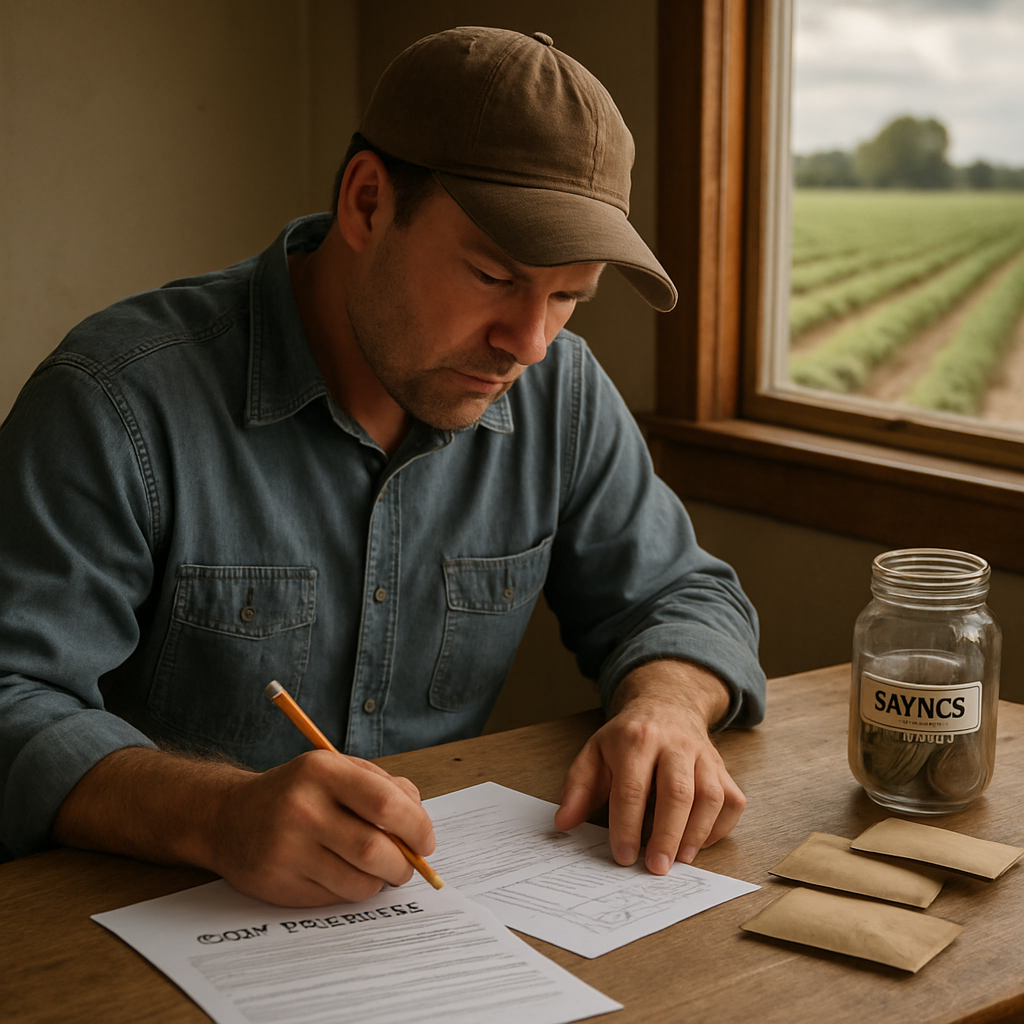
Consider a small rain-fed farm growing maize and pulses. The forecast is uncertain, and the household has limited savings. Before planting, the farmer compares an index policy with a locally assessed yield policy, checks whether the insured period covers establishment and flowering, and works out how much premium can be paid without sacrificing essential inputs.
The farmer also spreads planting across several dates and devotes part of the land to a second crop. These steps may reduce the risk of total failure, though they cannot prevent a prolonged dry spell. If rainfall falls below the index threshold, a payout could help buy seed for the next cycle. But if the farm is damaged and the index does not trigger, the household will still need its own buffer. That is the central trade-off.
In another season, rainfall may be adequate but a local pest outbreak cuts yields. A rainfall index may pay nothing because its trigger was not reached. A policy covering verified yield losses might respond, depending on its terms, while diverse crops and savings could soften the remaining blow. This shows why insurance should match the hazard—and why one policy rarely covers every risk.
After the season, the farmer should compare the policy’s performance with the actual loss. Was the trigger reached? Was the claim handled on time? Did the payment arrive soon enough to support recovery? Reviewing the answers can guide next year’s decisions, from changing coverage or planting plans to challenging an index that repeatedly fails to reflect local conditions. Such reviews can help farmers make better-informed choices about crop insurance for smallholders.
Conclusion
The best crop insurance decision starts with an honest assessment of what could sink the farm, what the household can afford to lose and how quickly it would need support. A clear policy can transfer some of that risk, but exclusions, basis risk and delayed payments remain important considerations.
For small farms, lasting protection comes from a combination of insurance suited to local hazards, practical measures to limit exposure, reliable records and a realistic financial buffer. Crop insurance for smallholders is most useful when it strengthens that system—not when it is treated as a guarantee against uncertainty. Comparing options carefully can help ensure crop insurance for smallholders supports the farm’s recovery and long-term resilience.