

Introduction
Farms rarely face one crisis at a time. A dry spell can weaken crops, increase pest pressure and reduce the amount available to sell. Then a market downturn may hit just as the farm needs cash for feed, fuel or another round of treatment. The risk isn’t simply that a forecast proves wrong. Several reasonable decisions, made in isolation, can leave the business exposed when conditions change.
Good farm risk planning is less about predicting the season than deciding how to respond when it doesn’t go as expected. It means identifying the farm’s main vulnerabilities, setting decision thresholds and keeping enough flexibility to change course. A plan should be specific enough to guide action, yet simple enough to use under pressure. In practice, farm risk planning gives the team a shared framework for making those decisions.
Assessing the farm’s vulnerabilities
Think of the operation as a team with different roles and limits. Soil and water determine how long crops can withstand heat. Crop choices shape exposure to weather, disease and market swings. Machinery and labour affect whether the farm can respond in time. Cash may not be on the field, but it sets limits on every other choice. Effective farm risk planning connects these factors rather than treating them as separate concerns.
Start with a map of the farm’s vulnerabilities, not a generic list of hazards. Note which fields have the least reliable water, which crops depend on a narrow planting or treatment window, and where pests could spread quickly. Include practical constraints such as irrigation access, storage, supplier lead times, borrowing capacity and the cost of keeping equipment ready.
Assess the farm’s financial position, too. A profitable operation can still be vulnerable if payments arrive late or debt repayments fall due after harvest. Forecast cash flow month by month, using conservative estimates for yield, prices and input costs. This gives a clearer picture than an annual profit estimate: it shows when the farm can absorb a setback and when it can’t. Farm risk planning should use this forecast to identify tight periods before they arrive.
Diversifying crops can spread risk, but it isn’t an automatic safeguard. Different crops may depend on the same water supply, require expensive specialist machinery or reach the market at the same time. The key question is whether the crop mix changes the farm’s overall pattern of losses and remains manageable with the available land, labour and skills. As part of farm risk planning, evaluate diversification against these practical limits.
Key factors
Drought preparedness starts with setting water priorities. Identify the fields and growth stages where irrigation is most likely to protect value, then decide what to do if supplies fall short. Options include conserving soil moisture, adjusting planting dates, maintaining pumps and lines, and arranging water access before demand peaks. Waiting for restrictions to arrive can leave few options and drive up costs. Good farm risk planning sets these priorities before the season becomes critical.
Set clear triggers for action. A rainfall deficit, soil-moisture reading or reservoir level might prompt a field inspection, a change to irrigation, a planting delay or a revised output forecast. Link each trigger to a decision the farm can actually make. A warning without an agreed response is information, not preparation.
Pest management requires the same discipline. Regular scouting helps distinguish a growing threat from routine pest presence. Clear thresholds can prevent both delayed intervention and unnecessary treatment. Record where pests appear, which controls were used and how well they worked. This history can guide future decisions and help reduce resistance, wasted inputs and harm to beneficial species. Farm risk planning should also account for pest outbreaks by defining who monitors crops and when action is warranted.
Price volatility is harder to control, but the farm can decide how much exposure to accept. Compare the cost and flexibility of forward contracts, insurance, storage and staggered sales. Each shifts risk differently. A locked-in price offers certainty but may mean missing out if the market rises. Storage preserves the option to sell later, but adds handling costs and quality risks. Farm risk planning can help weigh these trade-offs against the operation’s cash needs.
Base decisions on the farm’s break-even point. Calculate the price needed to cover variable costs, debt commitments and essential household or business withdrawals. Then consider what happens if both yield and price fall. A plan that works only when one remains favourable isn’t robust.
Emergency savings buy time as well as covering costs. Set a reserve target based on essential operating expenses and how long it may take for revenue to recover. Establish clear rules for when to use the reserve and how to rebuild it. If cash is tight, even a modest buffer can be supplemented with pre-agreed credit, as long as the repayment terms remain manageable in a poor season. A useful farm risk planning process makes those reserve rules clear in advance.
Assign responsibility, too. Someone needs to monitor weather and crop conditions; someone else should check cash forecasts. A designated person must have the authority to act when a trigger is reached. Risk planning can fail if every decision has to wait for a meeting during a narrow treatment or irrigation window.
Planning for a difficult season
Imagine a season that starts with low soil moisture, followed by heat during a sensitive growth stage. Scouting then finds rising pest numbers in one block, while the expected market price weakens. The farm can’t solve all three problems by spending more: water is limited, treatment costs money, and extra output may not earn enough to cover the expense.
The response begins with the priorities set in advance. Direct irrigation to fields where it is expected to protect the most value; monitor other areas and manage them according to realistic yield prospects. Use the pest threshold to decide whether treatment is justified, and the cash forecast to determine how much the farm can commit without jeopardising essential bills. Staggered or partly contracted sales can offer some protection against a further price drop without giving up every chance to benefit from a recovery.
Now consider a different turn: the dry spell ends, but a pest outbreak spreads and prices fall again at harvest. Revisit the assumptions instead of defending the original forecast. Update expected yields, check whether more inputs are economically justified, and use the reserve or credit plan within the agreed limits. The goal isn’t to keep every field or enterprise on its original path. It’s to preserve the farm’s ability to keep operating and make the next decision.
That’s the value of scenario planning. It can’t promise a successful season, but it can stop a surprise from causing paralysis. Each scenario should identify the signal, who makes the decision, what action to take, what it will cost and when to review the plan. This is where farm risk planning turns preparation into practical steps.
Conclusion
A durable farm risk plan connects field decisions to financial realities. Drought preparation, pest monitoring, crop diversification, price protection and emergency savings work best when they reinforce one another rather than sit on a checklist as separate tasks.
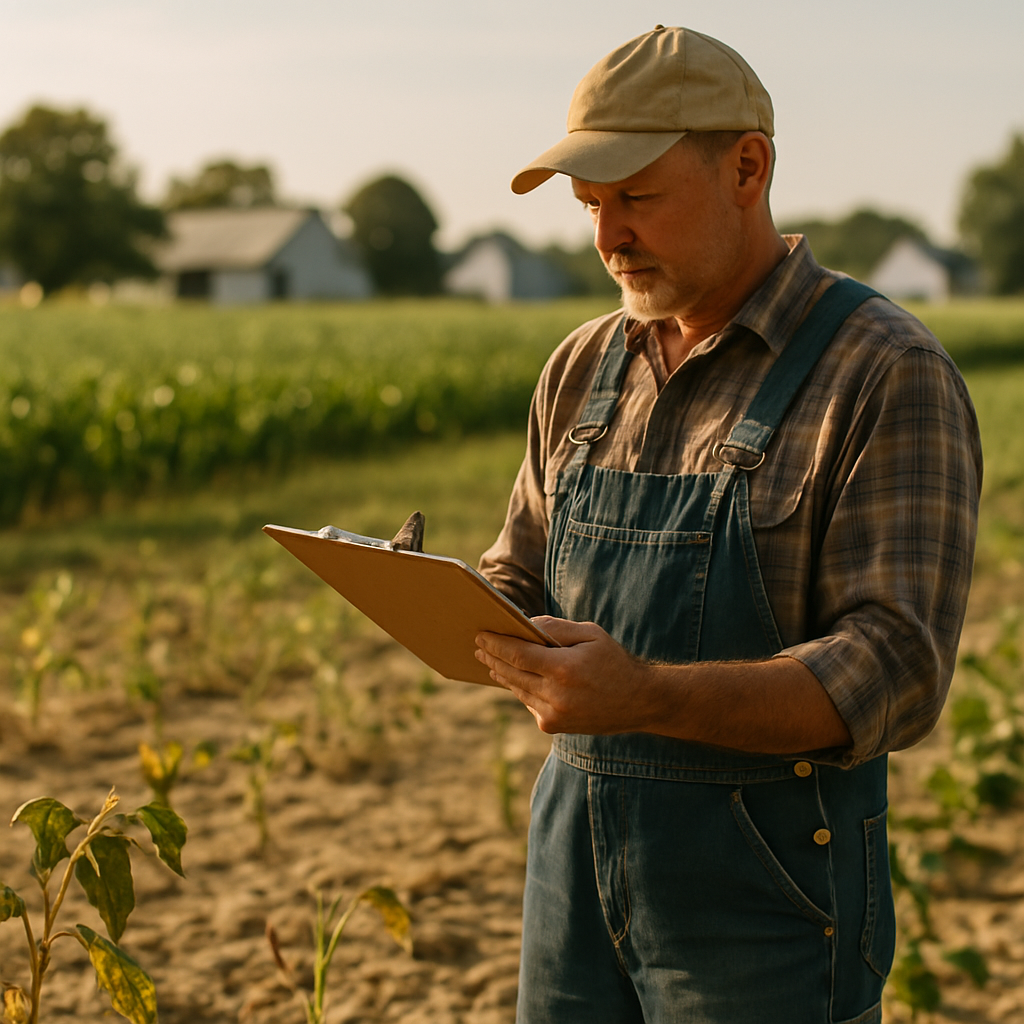
Review the plan before planting, update it as forecasts and markets change, and record what worked after harvest. The strongest operation isn’t the one that predicts every threat correctly. It’s the one that spots pressure early, knows which options remain open and can weather a bad season without losing the capacity to recover.